Category: A. Garnett Weiss

  • Picton launch of LIFE, AFTER LIFE—FROM EPITAPH TO EPILOGUE and a jigsaw puzzle featuring the book

    JC Sulzenko’s new book of poetry, Life, after life—from epitaph to epilogue, was launched November 30 at the Prince Edward County Public Library’s branch in Picton. The hour-long celebration included readings by those in attendance and ended with refreshments.

    Published under her pen name, A. Garnett Weiss, Life, after Life is JC’s third poetry collection. In this new book she turns words and phrases found in obituaries published in the Globe and Mail into over 60, five-line, singular poems.

    “I read them all—for the stories, for what they say about life rather than about death,” JC explained. “ I liken these poems to an epilogue or afterword, since each one rounds out what I drew from my readings rather than recasts an obituary about any one person.”

    Keys at the end of the collection provide the given names of each person about whom JC read.

    JC thanked the Library for its interest in and support for her work. She expressed her gratitude to Prince Edward County artist Martin Soldat for allowing the image of his painting to appear on the front cover.

    To see Martin Soldat’s fine artwork, go to: http://www.soldat.ca 

    The cover of JC’s book appears on the top shelf of a jigsaw puzzle in three sizes displaying books by Canadian authors in a cozy setting. Through an innovative partnership, the Canadian Authors Association and its members benefit by showcasing recent publications.

    Here’s how to buy a copy. Puzzle producer The Occurrence has in place solid arrangements to respond to every order. Go to:

    https://www.theoccurrence.ca/product/canadian-authors-1008-504-192-pieces/168?cs=true&cst=custom

    Copies of Life, after life are available through this website and at the following bookstores: Perfect Books and Octopus Books, Ottawa; Books & Company, Picton; and Book City in The Beach, Toronto.

  • THE LIGHT EKPHRASTIC November 2024 issue showcases JC Sulzenko and Vin Grabill

    JC thanks Editor Jenny O’Grady for selecting her to work with visual artist Vin Grabill for the 59th  issue of The Light Ekphrastic (TLE.)

     “I have been paired with exciting creators through this online, innovative journal a number of times. This autumn’s experience proved challenging and rewarding.”

     The journal’s process allows each partner to select from three offerings submitted by his/her/their counterpart.

     “Vin Grabill’s three paintings struck me forcibly. I found it hard to choose on which one to focus. Once I’d made my decision, I wrote “Geometrics for beginners” with Vin’s arresting image, “Idea,” as my point of departure.

    “From the three poems I put forward, Vin created the image “Head held high,” in light of my poem, “Do-si-do.” His work gives me a deeper understanding of the layers of intention in my own writing.”

    JC enjoys the collaboration at the heart of ekphrasis. “Looking at the work of an artist and then allowing myself as a person and a poet to respond, whether directly to the artwork, or indirectly as to where that reflection leads me, involves exploration, discovery, and learning. As I begin to write, I find that the poem knows where it must go to respond.”

    Here’s the link to the online journal featuring their ‘ARTnership:

    https://thelightekphrastic.com


  • LIFE, AFTER LIFE–FROM EPITAPH TO EPILOGUE launched in Toronto

    Aeolus House launched JC’s new book of poetry, Life, after life—from epitaph to epilogue, on Sunday, November 3, at the Free Times Café in Toronto. The book is published under JC’s pen name, A. Garnett Weiss.

    The event celebrated how JC turned words and phrases found in obituaries published in the Globe and Mail into over 60, five-line, memorable poems.

    JC explained that reading obituaries was uplifting, not a ‘down’ experience. “I read them all—for the stories, for what they say about life rather than about death.”  She likened the poems to an epilogue or afterword in the way each poem rounds out conclusions she drew from the prose articles and notices.

    Keys at the end of the collection provide the given names of each person about whom JC learned. “Listing the names reflects my wish to honour the memory of each person about whom I read while respecting their privacy. The keys also acknowledge obituary articles to which I referred,” JC added.

    The evening featured guest poets Donna Langevin and Kate Rogers reading from their own body of work in response to poems in Life, after life.

    “I was honoured to appear on the same program with Kate and Donna. They chose their own poems with such care and attention and picked up on themes in the four poems from Life, after life that they read aloud. I am most grateful to them.”

    Copies of Life, after life are available through this website, in Toronto at Book City in the Beach, in Ottawa at Perfect Books and at Octopus Books, in Picton at Books & Company.

  • ARTSCENE featured JC’s winning cento on 99.3FM Voice of the County

    JC thanks ARTSCENE host Sarah Moran for inviting her to participate in the discussion on June 2 of  winning entries in the 2023 Wind & Water Writing Contest, the 5th such competition sponsored by County Arts in Prince Edward County.

     JC, writing as A. Garnett Weiss, won first prize for her cento, “For our many moods, there is nothing like a lantern.”  Taking part in the conversation about the contest and sharing thoughts about why and how they write were contest Judges Leigh Nash and Andrew Faulkner and prose winner Dawn Miller.

     Copies of Weiss’s collection, BRICOLAGE, A GATHERING OF CENTOS, a finalist for the 2022 Fred Kerner Book Award (Canadian Authors Association), are available from Books & Company in Picton and at the Prince Edward County Municipal Library.

  • Ontario Poetry Society and Aeolus House Poetry Afternoon April 15, 2PM-4PM

    JC reads from her collection, Bricolage, A Gathering of Centos, at the Spring into Poetry in-person book launch, Saturday, April 15 at the Toronto Public Library’s Main Street Branch, 137 Main Street.

    IB Iskov, President and Founder of the Ontario Poetry Society (TOPS), and Aeolus House Publisher Allan Briesmaster co-host this TOPS event at which members will read from their new titles.

    JC, who serves as a member-at-large on TOPS’ executive committee, will read a cento from her collection. Which one will she choose?

    Here’s a link to the TOPS website with full details: https://www.theontariopoetrysociety.ca/Events.html


  • BRICOLAGE in the Poetry Super Highway 2023 Great Poetry Exchange

    JC Sulzenko participated in the Poetry Super Highway’s Great Poetry Exchange by sending a copy of her collection of centos to another poet whose address the US-based publisher provided. She wrote BRICOLAGE as A. Garnett Weiss, her pseudonym.

    Here’s the link to the list of poets whose work featured in this 2023 initiative:
    https://www.poetrysuperhighway.com/psh/great_poetry_exchange/

    “This exchange is the brainchild of the Poetry Super Highway, which offered a most welcome lift in the dead of winter. Some 101 poets joined in the program and were paired randomly. I am most curious about my ‘twin’s’ poetry and look forward to the surprizes in store for me,” JC commented.

    “Thanks to publisher Rick Lupert for the idea and for showcasing the work of participating poets on the Poetry Super Highway site.”

    The Poetry Super Highway explains its mission this way: “To expose as many people to as many other people’s poetry as possible.” The publisher encourages users to read poems, submit their poetry for publication, enter its annual poetry contest, and peruse its directory of writing and poetry websites.

  • Impromptu poetry morphs into BESPOKE POETRY or POETRY To-GO– JC Sulzenko writes poems on commission

    “I just can’t resist the challenge: writing to a subject not of my choosing, suggested by someone whom I didn’t know beforehand, for the most part, to mark a birthday, an anniversary, a special event or person, or in memoriam,” JC admits. “I’ve now launched “BESPOKE POETRY” to give me the chance to create new poems this way.”

    JC began her love affair with poetry written on demand many summers ago at what was then known as “Art in the park,” a showcase for artists, crafts people and assorted others in her neighbourhood.

    Wearing a lot of sunscreen and with paper pad and pen, she set up a table and offered to write poems for visitors at $2.50 each, the proceeds of which went to a charitable organization. She cannot remember to which one the modest take went that first year.

    She attached certain caveats to the process: payment upfront; she held the copyright to the poem; no one could dispute what she had written; she reserved the right to refuse to write on a subject with which she was not comfortable.

    Those who dared to test her skills were interviewed briefly about the subject they had chosen, then sent away to wander among the artisans. When they returned, they picked up the poem in a neat scroll. More often than not, they unravelled the poem and read it on the spot. And commented. Almost all very pleased with the result.

    Though not a big fundraiser, JC found the experience exhilarating. “I used a number of the poems written at that festival in “Fat poems Tall poems Long poems Small,” my ekphrastic book of poems for families and children to which Ottawa artists contributed interpretative illustrations.” Several other poems found their way into chapbooks.

    For a couple of years, JC returned to the venue, adding a tent and chairs to facilitate the interviews and for the sake of privacy. Each year, the price tag went up by a bit. The final year of her participation, the funds raised were donated to a local hospital.

    Then she stopped, overtaken by other writing projects including “Boot Crazy” and later by “What My Grandma Means to Say,” her book and play about Alzheimer’s disease.

    Now she has taken up poetry on commission again with enthusiasm. The process begins with agreement on a base price for the poem, which can take the form of free verse or rhyme. The ‘buyer’ pays JC upfront. Then, there’s an interview which can take as little as 10 minutes over the phone or up to an hour face-to-face, where that’s convenient to the parties.

    JC considers carefully what she has learned about the subject and writes the poem within the timeframe agreed to in the discussions. The length of the poem can vary depending the subject matter. Once she’s satisfied, she shares the poem and asks for comments as to accuracy only. If there are any factual inaccuracies, she corrects them and then provides a final text.

    She asks that the poem not be published without her prior permission and then only with clear acknowledgment as to her authorship.

    “I have written about a granddaughter’s graduation from high school on her birthday, the death of a child, a dog who dreams. It’s such an adventure, never knowing where a new poem will begin or to where it will take me.”
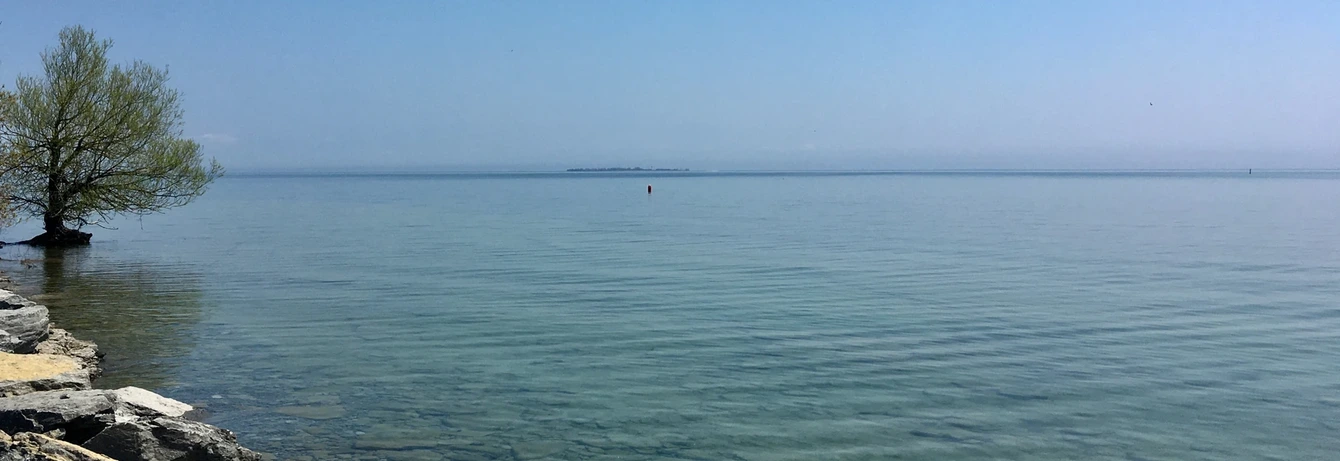


  • “Siren,” A. Garnett Weiss creates a found poem inspired by Silver Birch Press’s Nancy Drew Anthology, published October 1, 2016

    Siren


    When you feel like talking, tell

    these stories.

    In fine antique gallery paintings,

    even those depicting angels,

    a woman is seen gliding over the water

    dressed in such a flimsy, evening-type dress

    you will forget what happened,

    if you capture her.

    From somewhere nearby,

    hear low singing

    sounds like some fairy tales.

    Refuse to follow.

    Don’t look back.

    Hunt for something luminescent—

    the phenomenon of fireflies,

    a flirtation

    through a tangle of vines;

    cold light

    like a mirror,

    calm as the water

    a ways offshore—

    absolutely true.


     Found poem key: all phrases are non-contiguous and are taken unaltered from “Nancy Drew: The Secret of Mirror Bay,” Carolyn Keene, Grosset & Dunlap, NY, 1972. Page references per line follow: Line 1: p.65; Line 2: p.107; Line 3 and 4: p. 95 – one phrase split into two lines; Line 5: p. 2; Line 6: p.138; Line 7: p. 8; Line 8: p.73; Line 9: p. 24; Line 10: p.65; Line 11: p.45; Line 12: p.60; Line 13: p.141; Line 14: p.22; Line 15: p.151; Line 16: p.61; Line 17: p.78; Line 18: p.157; Line 19: p.100; Line 20: p.23; Line 21:p.120; Line 22: p.105


  • Brick Books Celebration of Canadian Poetry Series features JC’s introduction of A. Garnett Weiss who celebrates Al Purdy and Friends

    The day before Canada Day, Brick Book’s website featured JC’s article on A. Garnett Weiss’s use of the cento form to celebrate the writing of poets such as Al Purdy, Lorna Crozier, E. J Pratt, Monty Read, Molly Peacock and Leonard Cohen.

    Here’s the link to the article:  http://www.brickbooks.ca/category/news/celebrate-canadian-poetry/

  • Day 30 poem, “Generation, from memory,” the last piece in the month-long poetry challenge

    I accepted the day 29 prompt in NaPoWriMo.net because the Day 30 prompts from that site and from Found Poetry Review were not a good fit. I am pleased to have participated in this month-long writing challenge but, at the same time, feel relieved it’s over. And apologetic that I was a day late once in a while.

    Here’s the prompt: “write a poem based on things you remember. Try to focus on specific details… You could start… every line with “I remember,” and then you could either cut out all the instances of “I remember,” or leave them all in, or leave just a few in….”

    What has emerged is a more personal poem than my other offerings this month. Perhaps that’s fitting for the last in this series, perhaps not. I’ll let the poem be for a while, then may revisit “Generation, from memory.”

    Thanks to Found Poetry Review and NaPoWriMo.net for kick-starting every day in April with great ideas.

    Generation, from memory

    In May, the jubilant pronouncement: “I’m pregnant!”
    Your mother’s words turned an ordinary day into a celebration,
    then draped me in a shawl of worry: Would she be alright? Would you?

    In June, she popped pills to stem the nausea, then slept day-long.
    My gentle words that this would pass so inadequate,
    I offered mint-leaf tea, dry toast, warm blankets and hugs.

    In July, a visit to the midwife, tattooed and pierced, tightened
    the worry around my shoulders. I asked myself could I trust
    her judgment, her experience? Could I trust her with my daughter?

    The rapid thrum/thrum/thrum/thrum of your heartbeat filled the room
    when you were smaller than a lime, still on the tree. At that moment
    I understood the passion, the argument about when life begins.

    In November, my hand on your mother’s stomach—smooth,
    without stretch marks, swollen to watermelon size— I felt
    you kick at me as though you were dancing the can-can.

    In January, on walking home with your mother from the spa,
    sudden cramps stopped us every ten minutes, then every five,
    then every fifteen as she breathed through your false start.

    I packed that evening, took the long ride home, even though
    I wanted so badly to stay, to wait with her it hurt in my gut.
    I gathered the shawl to me but felt its cold through the car window.

    Then a text message: your mother and father were at the hospital,
    your mother resting well with a local anesthetic.
    I sat in the living room, sipped wine, held your grandpa’s hand.

    Waiting, worrying, waiting, worrying, waiting, worrying,
    waiting, worrying, waiting, worrying, waiting, worrying.
    In the silence, the shawl constricted like a straitjacket.

    The phone rang, delivering your mother’s voice.
    She sounded like a child herself.
    “He’s here! It’s a boy. I’m looking at him.”

    I tasted tears as I put down the receiver. I cast off the shawl,
    left early the next morning to greet you before you were a day old.
    Coming into the hospital room alone that first time to hold you,

    light as a feather, I studied your eyelashes and tiny fingernails, traced
    the line of your soft cheek with my arthritic hand. I both believed
    and couldn’t believe the wonder you are, of my flesh, my blood.

    I began singing “Hush little baby, don’t say a word…”
    for the first time in almost thirty years
    and remembered all the words.